


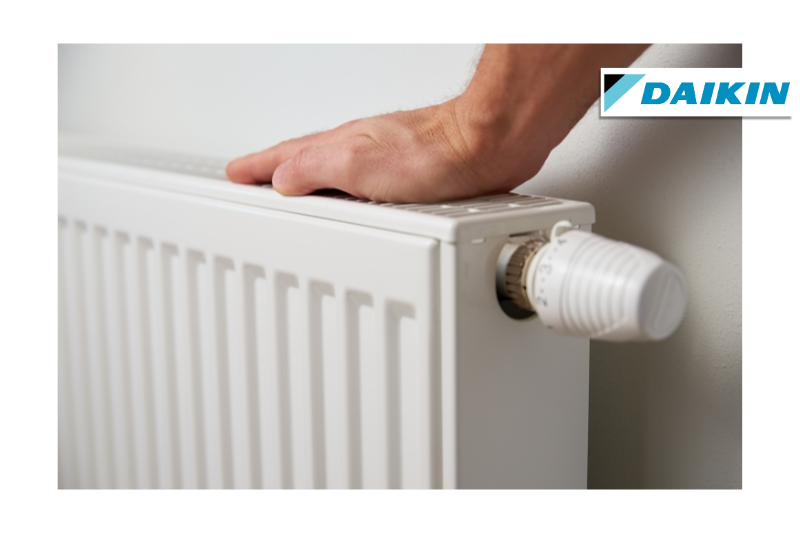


When it comes to choosing a heating system, it can be challenging to decide between electric heating and radiator heating. Each option offers distinct features in terms of performance, energy consumption, and comfort. This article explores these differences to help you make an informed decision for your home.
1. How Does Electric Heating Work?
Electric heating systems convert electricity into heat through heating elements. Popular electric systems include convectors, radiant panels, and baseboard heaters. Each technology distributes heat differently, with quick temperature rise but fast cooling when turned off.
Advantages:
- Quick installation and affordable initial cost
- Easy to use and compatible with smart thermostats
Disadvantages:
- High energy costs if used as the primary heating system
- Less efficient in very cold climates
Daikin offers climate control systems that combine electric solutions with optimized efficiency, allowing for more economical and sustainable heating.
2. How Does Radiator Heating Work?
Radiator heating typically uses a fluid (water or oil) heated by a boiler, which circulates through radiators to distribute heat. This type of heating is more common in older homes or buildings with hydronic boilers. Radiators provide steady and lasting warmth, even after the boiler is turned off.
Advantages:
- Better heat retention, even after the system is off
- More suitable for cold climates
Disadvantages:
- Higher installation costs
- Regular boiler maintenance required
Daikin’s solutions sometimes combine hydronic heating with modern technologies to optimize efficiency and reduce energy consumption.
3. Comparison: Electric Heating vs. Radiator Heating
Installation and Usage Costs
- Electric heating is generally cheaper to install, but operating costs can add up due to high electricity consumption.
- Radiator heating requires a higher initial investment, but it can be more economical in the long term, especially with a high-efficiency boiler.
Energy Efficiency and Comfort
- Electric heating is ideal as a supplemental solution, offering quick temperature rise.
- Radiators provide superior comfort with more stable and consistent heat distribution.
Environmental Impact
Modern electric systems, such as those offered by Daikin, incorporate energy-efficient technologies to limit environmental impact. Similarly, high-efficiency hydronic boilers help reduce fuel consumption.
4. Which Heating System Should You Choose?
The choice between electric heating and radiator heating largely depends on your needs and the type of home you live in. If you have a small apartment or need a supplemental heating solution, electric heating might be sufficient. However, for larger homes or regions with harsh winters, radiator heating is often the better option.
In all cases, it is recommended to consult a heating expert like Daikin to assess the best solution for your home, ensuring optimal comfort while managing energy consumption effectively.